Cascadia installs, replaces, and completes selected repairs on residential fences in Kirkland. The estimate begins with the proposed line, the street the property abuts, grade, gate access, and the distance from the curb. Board direction and material follow those questions.
The Kirkland service-area overview covers both deck and fence work, and the Kirkland deck builder page handles deck projects. This page focuses on the fence decision and what the city publishes for fence height and placement.
The street your property abuts sets the front-yard limit
The Kirkland Zoning Code allows fences not over six feet in height anywhere on the property, with listed exceptions. The exceptions are about the street.
A detached dwelling abutting a neighborhood access or collector street may not have a fence over 3.5 feet in height within the required front yard. On corner lots with two required front yards, that restriction applies only within the front yard adjacent to the front facade of the structure.
Along a principal or minor arterial, a detached dwelling may not have a fence over 3.5 feet within three feet of the property line, except where the abutting arterial contains an improved landscape strip between the street and sidewalk. In that case the area between the fence and the property line must be planted and maintained by the owner.
Rear and side property lines and required rear and side setback yards allow up to six feet. A fence over six feet may not be located in a required setback yard at all, and outside those yards it is capped by the maximum structure height for the zone.
Kirkland has a real sight triangle with published numbers
A fence may not violate the sight distance provisions of KZC 115.135, which cover intersections and the entrance of driveways onto streets. The city handout states that fences over three feet in height may not be located within the sight triangle.
Public Works Policy R-13 sets the detail. It requires the area to be kept clear of sight obstructions between three feet and eight feet above finished grade, and it lists driver-point distances by intersection and driveway type. Pedestrian sight distance at a driveway uses a driver point at the center of the driveway approach lane measured 14 feet from the back of the sidewalk, extending to points 15 feet from each driveway edge.
The exact triangle for a specific driveway is determined by Public Works. Send photos of the driveway approach and the corner so the layout can be planned around it rather than corrected afterward.
Fifteen feet from the curb, unless you can show the line
Kirkland states that a fence may not be within 15 feet of any street curb, or the edge of the street pavement where no curb exists. The code then adds the practical exit. If the applicant can show with a survey or other reasonable means the location of the property line, the fence can be placed on the property line regardless of the distance from the curb.
The handout notes that the survey or other reasonable means must satisfy the Planning and Public Works departments. A fence in the public right-of-way is a separate matter and requires a Right-of-way Permit and a recorded Hold Harmless Agreement, and the city may require its removal when the right-of-way is needed.
Retaining walls, shoreline, and critical areas
The combined height of a fence and a retaining wall within five feet of each other in a required yard may be a maximum of six feet. Rockeries and retaining walls may be a maximum of four feet high in a required yard, and a wall over four feet requires a permit. A modification is available when the building code requires a guardrail, but it must be approved by Planning before installation.
No fence of any height may be placed waterward of the shoreline setback required in Chapter 83 KZC, or within any portion of a side yard that coincides with that setback. Fences may not be located in a stream, a wetland, their associated buffers, or a Native Growth Protection Easement.
Construction of any fence over six feet requires a building permit. The city also states that permit exemptions do not apply in areas of flood hazard, wetland, steep slope, shoreline, or other land use critical areas.
Plan the gate before the adjoining panels
A gate needs enough width for its actual use, a workable swing direction, latch clearance, supported posts, and room above changing grade. Daily access for bins, pets, and equipment can point to a different opening than occasional wider access.
The posts beside a gate carry repeated movement, so their placement and support belong in the fence plan rather than in a hardware decision made after the panels are built. The gate and selected fence repair guide explains when a dragging gate reflects post movement rather than a latch problem.
A Cascadia fence example
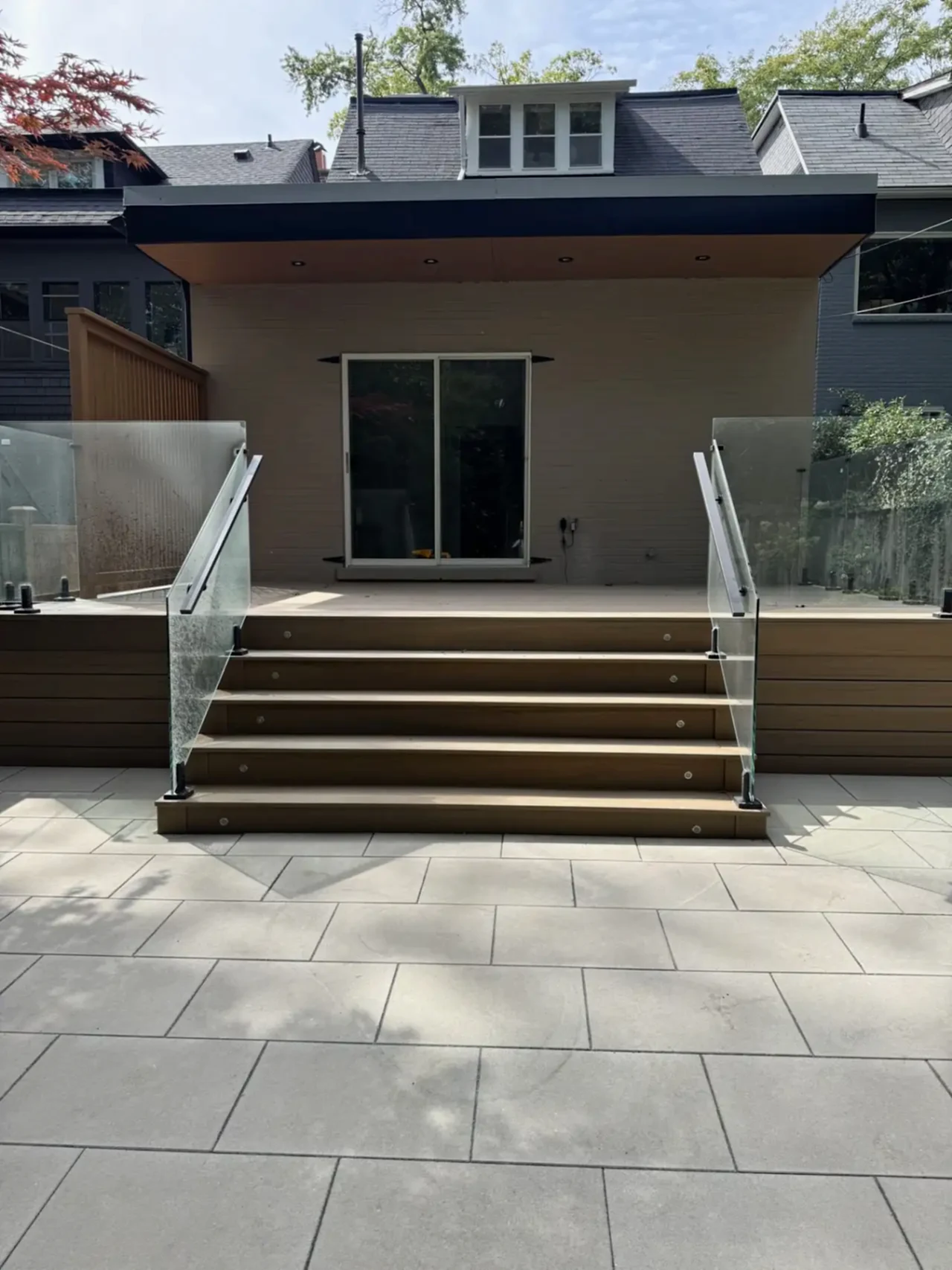
The project image on this page is Cascadia work. Its location is not published, and it is not presented as a Kirkland installation. The related finished composite fence with planting shows how the top line, post spacing, and planting edge work together along a run.
The example shows the service. It does not establish a Kirkland address, permit history, customer, price, product specification, or completion date.
What to send for a Kirkland fence estimate
- The address or ZIP code and what the fence needs to do
- Which street the property abuts and whether it is an arterial
- Wide photos of the full line, both ends, corners, and every grade change
- Photos of the driveway approach, sidewalk, curb, and any corner
- Intended height, board direction, post preference, and gate locations and widths
- Photos of retaining walls, rockeries, and raised beds along the route
- Any available survey, plat, easement, NGPE, shoreline record, or earlier permit record
- Whether the scope includes removal, disposal, selected repair, or full replacement
Kirkland fence questions
Can I run a six-foot fence along the front of my lot?
It depends on the street. Kirkland limits a detached dwelling to 3.5 feet within the required front yard when the property abuts a neighborhood access or collector street, and applies a separate 3.5-foot rule near principal and minor arterials. The city decides how the classification applies to a specific address.
How close to the street can the fence go?
The general rule is no closer than 15 feet from the curb or pavement edge. If you can show the property line with a survey or other reasonable means acceptable to Planning and Public Works, the fence can go on the line instead.
Does the corner of my lot change anything?
Yes. Fences over three feet may not sit inside the sight triangle at intersections and driveways, and Public Works determines the applicable triangle for the location.
Does a retaining wall reduce the fence height?
Within a required yard, a fence and a retaining wall within five feet of each other are capped at six feet combined. Send photos of any wall along the route so it is designed in from the start.
Cascadia Deck & Fence LLC is a Washington contractor, registration CASCADF741LJ, and is licensed, bonded, and insured. Free estimates are available. Workmanship warranty options up to four years are available with select packages and must be documented in the written agreement.
Read the regional permit research guide, then request a free Kirkland fence estimate with photos of the full line, the driveway approach, and any grade change.