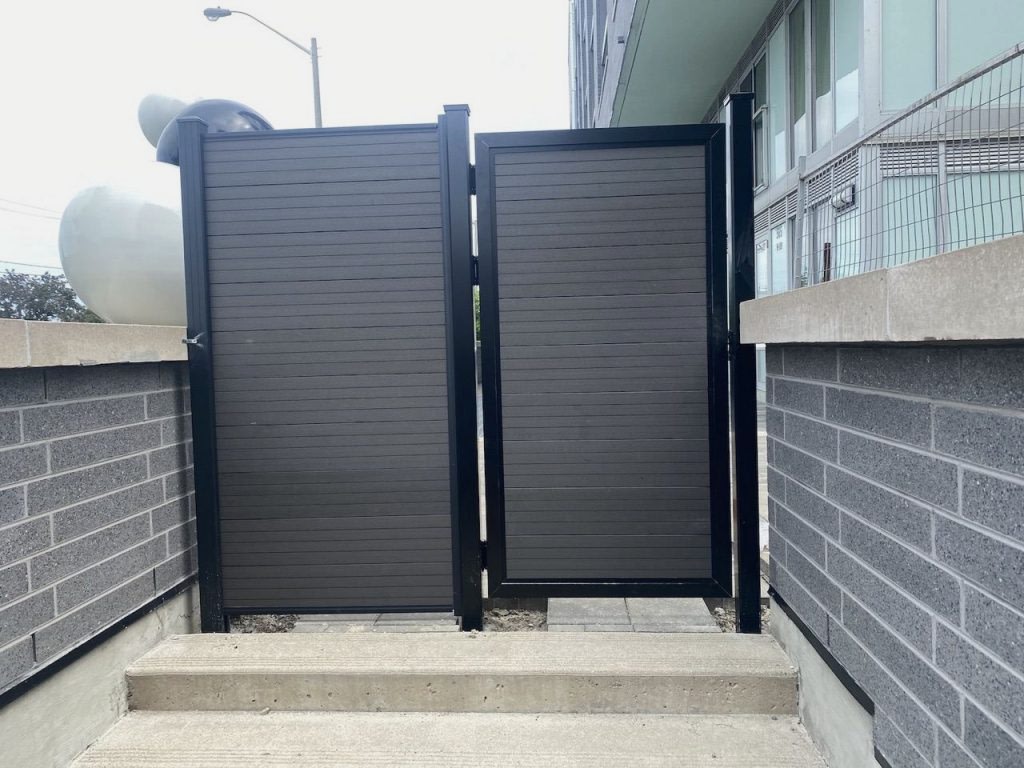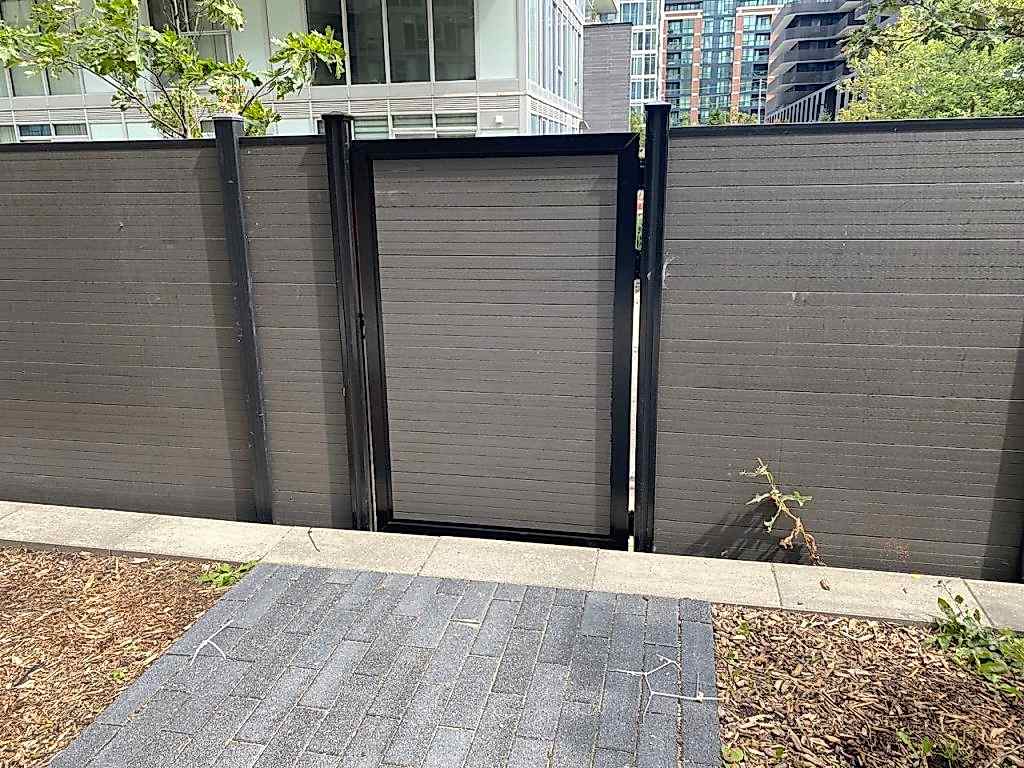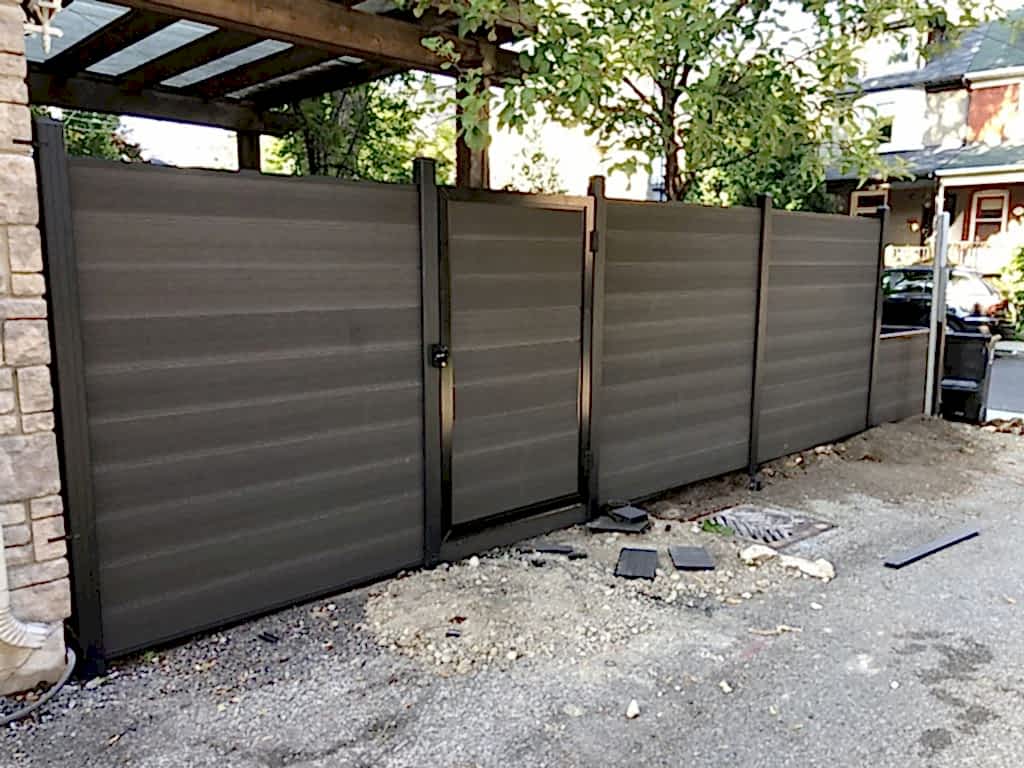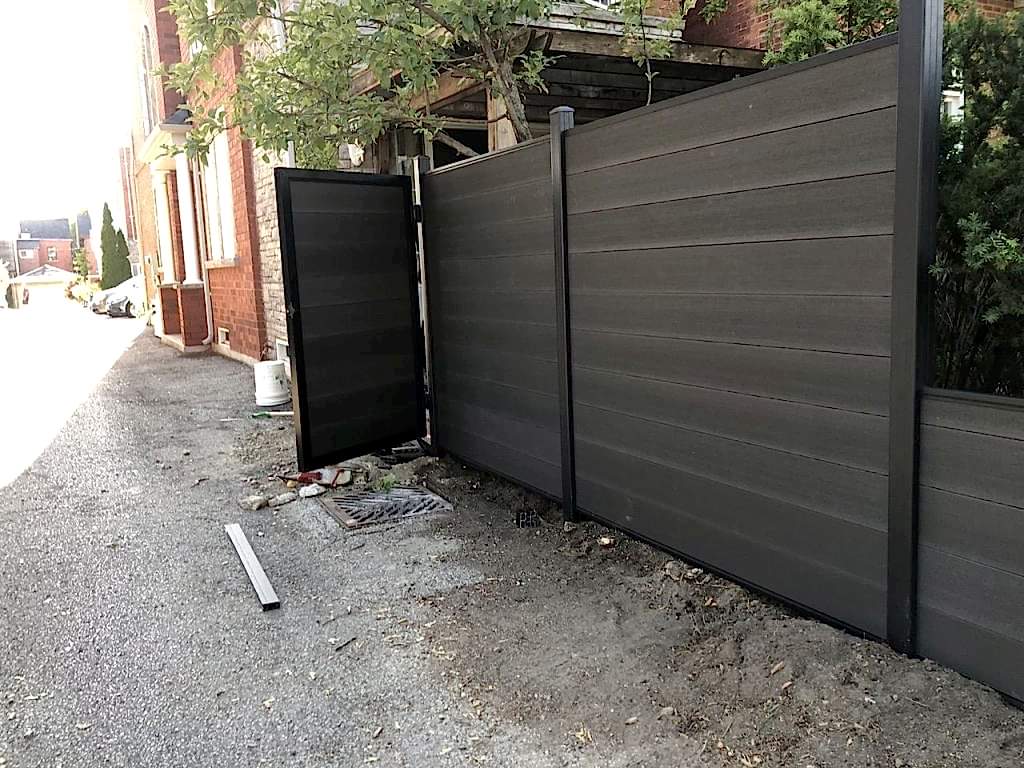
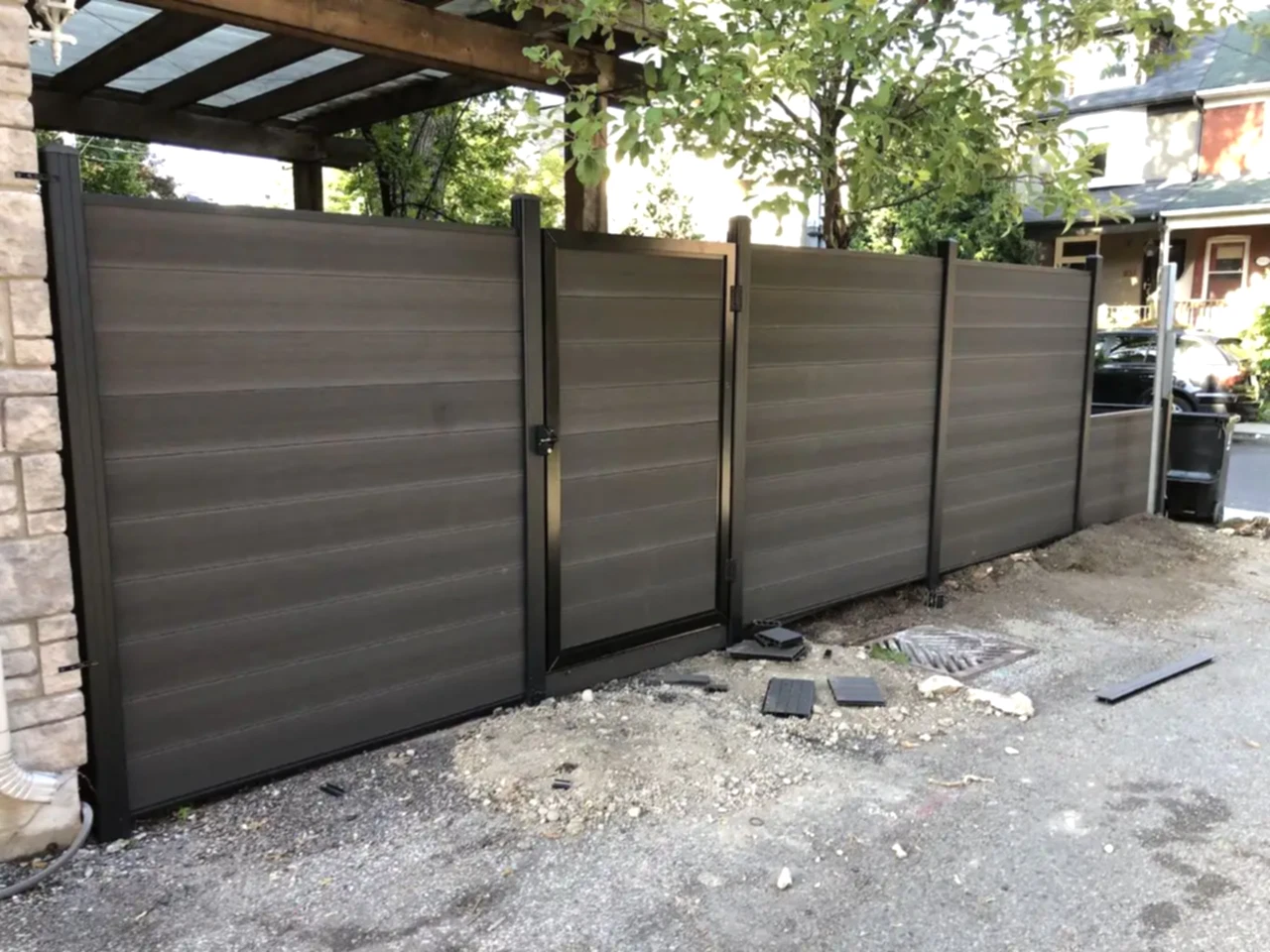
A fence gate repair should start with the supporting parts, not only the visible symptom. A dragging gate, loose latch, leaning section, or damaged panel can come from the gate frame, hinges, posts, rails, footing, grade, or wider fence movement. The surrounding structure needs to be checked before a limited repair is recommended.
Cascadia Deck & Fence builds gates and handles selected residential fence repairs and replacement across the Greater Seattle Area. We review the condition, explain the practical options, and prepare a written scope for work that fits our service.
Plan a new gate around daily access
A gate should fit the way people use the property. Start with the opening needed for regular access, then consider swing direction, latch location, nearby steps, grade, planting, walls, and the route through the yard. A wider opening or changing ground level can alter the frame, posts, hardware, and adjoining panels.
Ground clearance deserves an early decision. Too little clearance can cause contact as the gate moves across a slope or uneven surface. Too much can leave a gap that does not fit the homeowner’s goal. The correct clearance depends on the path of the gate and the conditions below it.
The gate also has to match the fence. Board direction, spacing, top line, trim, and visible hardware affect the finished connection. See the residential fence service overview when the gate is part of a larger installation or replacement.
Trace a gate problem to its source
Several failures can create the same symptom. A gate may drag because the frame is out of square, a hinge has moved, a support post is leaning, the ground has changed, or the adjacent fence is shifting. A latch that no longer meets its receiver may have a hardware problem or may simply reveal movement elsewhere.
The assessment should check the gate frame, hinges, latch, fasteners, supports, footing area, and nearby fence alignment. Hardware replacement can be useful when the structure remains supported and square. Resetting or replacing a post may be necessary when movement begins at the support. A gate that is damaged or poorly matched to the opening may need a new frame or broader replacement scope.
This review does not produce a safety certification or guarantee that an unseen condition is minor. Photos can help with the first conversation, but a repair recommendation depends on the actual fence.
Decide whether a fence section is repairable
Fence repair is most practical when the failure is isolated and the surrounding components remain serviceable. A damaged board, limited rail problem, loose fastener, or gate hardware issue may fit a focused scope. The exact repair still needs a compatible material and a sound place to connect.
Repeated post movement, deterioration across several sections, widespread misalignment, or a fence that no longer fits the yard may point toward partial or full replacement. Replacing surface boards while leaving failed supports would not address the underlying condition.
Cascadia handles selected fence repairs rather than promising every repair category. The written estimate should identify what remains, what is replaced, and what concealed or surrounding conditions could change the recommendation.
Match the repair to the existing fence system
A repair has to work with the fence that stays. Board dimensions, direction, spacing, rails, posts, fasteners, coating, and weathering can affect compatibility. New cedar will not necessarily match the color of boards that have been exposed outdoors. A substituted component can also look different even when it performs its intended job.
For wood layouts, review our cedar and horizontal fence guidance. If screening is the main concern, the privacy fence page explains sightlines, height, grade, and landscaping. For a failed wood post or a planned change in post material, see the metal-post fence page.
Those pages are planning references, not a promise that a particular material or post conversion will fit an existing fence. Compatibility must be assessed at the property.
Check grade, drainage, roots, and access
A fence can move for reasons that are not visible in the panel. Grade, soil disturbance, roots, drainage, retaining walls, and repeated gate use can affect posts and alignment. The repair assessment should note these conditions without guessing at a cause before the site is reviewed.
Access affects repair work too. Narrow side yards, mature planting, hardscape, or structures close to the fence may limit how a post or panel can be removed. The estimate should account for the part of the property that must remain protected and the route available for materials.
Confirm rules before moving the fence line
Replacing a component in the same general location is different from changing a fence’s height or placement. Jurisdiction, yard location, visibility, retaining walls, critical areas, and other conditions can affect the requirements. Seattle publishes city-specific fence guidance, while King County handles unincorporated properties. Other cities have their own rules.
New or replacement posts require excavation. The Washington Utilities and Transportation Commission directs anyone performing digging to request an underground utility locate before work begins. Private utilities and site features may need additional information. The project agreement should assign utility-locate, permit, and property-document responsibilities.
What belongs in a gate or repair estimate
For a new gate, the scope should identify the opening, frame and board layout, supports, hardware, swing, clearance, and adjoining fence work. For a repair, it should identify the observed problem, components to remain, components to replace, access, and any condition that cannot be confirmed before work begins.
Cascadia provides free project estimates. Cascadia Deck & Fence LLC is a Washington contractor, registration CASCADF741LJ, and is licensed, bonded, and insured. Workmanship warranty options up to four years are available with select packages and must be documented in the written agreement.
Gate and fence repair questions
Can a dragging gate be adjusted?
Sometimes, but the cause matters. Hardware adjustment may help when the frame and supports remain sound. A leaning post, distorted frame, changing grade, or movement in the adjoining fence can require a different scope.
Can one fence panel be repaired?
A focused panel repair may be reasonable when the posts, rails, and adjacent sections remain serviceable and compatible material is available. The rest of the fence should be checked before that conclusion is made.
Does Cascadia repair every type of gate?
Cascadia offers residential gates and selected fence repairs. Automated gates, commercial systems, welding, metal fabrication, emergency response, and standalone inspection reports are not listed as standard services.
What should I send before an estimate?
Send the property ZIP code, a full view of the gate or damaged section, close photos of posts and connections, and a short description of what changed. Include the ground, latch side, hinge side, and adjacent panels when possible.
Request a free gate or fence repair estimate and attach both close and wide photos of the problem area.